
Webinar: Limiting the Impact of AI Data Centers on Fatigue Life of Thermal Turbine Generators in the Grid
August 6, 2026 @ 4:00 pm – 5:00 pm

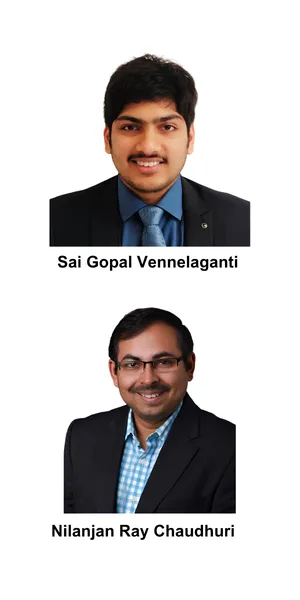
Featured Speakers: Sai Gopal Vennelaganti, Manager, Global Power Systems Lead, Tesla and Nilanjan Ray Chaudhuri, Full Professor with the School of Electrical Engineering and Computer Science, Penn State
Moderator: Julia Matevosyan, Associate Director, Chief Engineer, ESIG
About the Webinar: In this webinar, first the speakers will propose a framework to assess the impact of variations in artificial intelligence (AI) data center (DC) loads on the fatigue damage of steam/gas turbines of the synchronous generators (SGs) from torsional oscillations. Next, a simple three-step process that is supported by frequency-domain analysis will be laid out to quantify the limits on fluctuations in AI DC loads. In the first step, the maximum allowable variation in electrical power output at each SG terminal is independently determined from the first principles. This step needs only a lumped multi-mass model of the mechanical side of the SG. In the second step, the speakers propose a new approach that relies on load flow to determine the so-called algebraic ‘interaction factor’ that maps the change in AI DC load at a given bus to the corresponding change in each of the SG power outputs. In the third step, the speakers propose a method to determine the allowable fluctuations when multiple AI DC loads are present in the system. After the optimal limits on fluctuations are established, the speakers will describe mitigation options that can satisfy the established limits.
About the Speakers: Sai Gopal Vennelaganti serves as the Manager, Global Power Systems Lead at Tesla. In this role, he directs the technical strategy for power system modeling, industry engagement, and product development. His team is responsible for model development, hardware-in-the-loop (HIL) testing and resolving complex interconnection issues for utility-scale storage and data centers. Previously, he served as a Staff Engineer at Tesla and a research scientist at EPRI, where he specialized in power system stability, controls, and resilience. He holds a Ph.D. in Electrical Engineering from Penn State University, where he received the Dr. Nirmal K. Bose Dissertation Excellence Award.
Nilanjan Ray Chaudhuri received the Ph.D. degree in power systems from Imperial College London, London, U.K. in 2011. From 2005 to 2007, he was with General Electric (GE) John F. Welch Technology Center. From 2011 to 2014, he was a Lead Engineer with GE Global Research Center, Niskayuna, NY, USA. From 2014 to 2016, he was an Assistant Professor with North Dakota State University, Fargo, ND, USA. He is currently a Full Professor with the School of Electrical Engineering and Computer Science, Penn State, University Park, PA, USA. He was the Lead author of the book “Multi-Terminal Direct Current Grids: Modeling, Analysis, and Control” Wiley/IEEE Press, published in 2014. He was the recipient of the National Science Foundation Early Faculty CAREER Award in 2016 and Joel and Ruth Spira Excellence in Teaching Award in 2019. He is also a Senior Member of the IEEE and a Member of IEEE PES. In 2024, Dr. Ray Chaudhuri was elevated to the rank of Fellow of Penn State Institute of Energy and the Environment (IEE).
The Q&A for this session will be facilitated on Slido. Click here to submit your questions.