

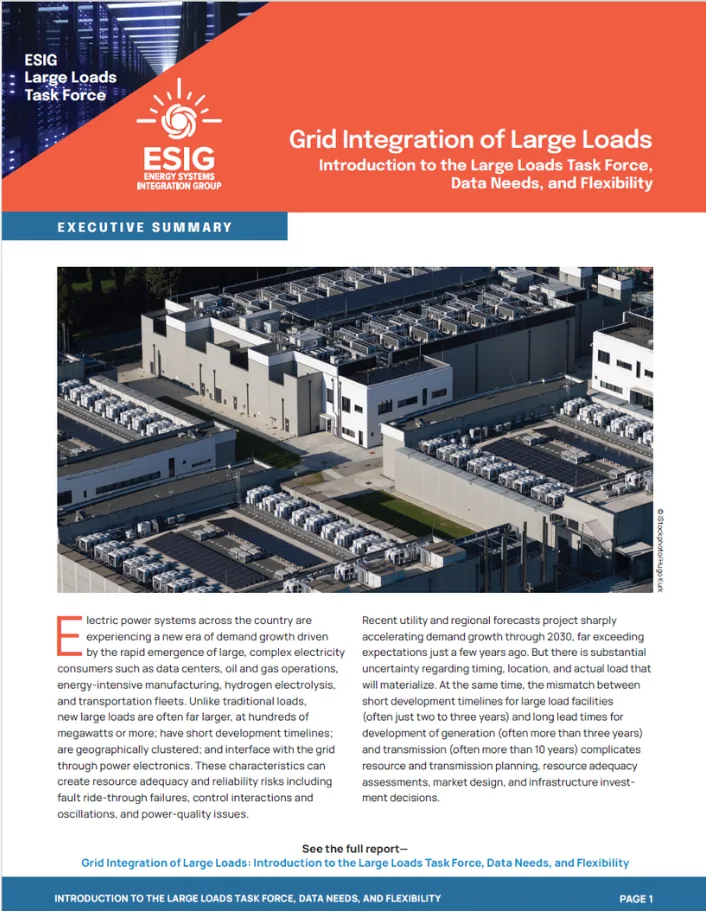
Grid Integration of Large Loads: Introduction to the Large Loads Task Force, Data Needs, and Flexibility provides an overview of the Large Loads Task Force, a multi-stakeholder body that brings together utilities, regional transmission organizations, independent system operators, data center operators, technology providers, regulators, and researchers to work through the technical questions large loads pose to grid planning and operations. The report establishes common definitions, characterizes how new large loads differ from traditional industrial growth, and names two cross-cutting issues that surface across every focus area the task force examined: insufficient data for planning studies and the challenges and potential for large load flexibility.
Regarding insufficient data, utilities and regional system operators frequently lack timely, standardized, and sufficiently granular information on large loads’ characteristics, ramping behavior, disturbance ride-through capabilities, and flexibility capabilities. Without that data, planning and operational studies rely on assumptions or proxy models that may underestimate reliability risks or drive overly conservative and costly infrastructure solutions.
And regarding large load flexibility, many new large load facilities have advanced control systems—and some have associated generation or storage—that can enable them provide reliability services, shift demand, or self-supply when the grid is stressed. There are many benefits of integrating that flexibility, including for interconnection, planning, and market frameworks, where flexibility can mitigate near-term infrastructure constraints (allowing large loads to interconnect before the necessary transmission upgrades are completed), support resource adequacy, and reduce total electricity system costs.
This is the introductory report in a series of 11 publications from the ESIG Large Loads Task Force. Please see the other reports on the Large Loads Task Force main page.