Return to the GFM performance page
The Kapolei GFM Energy Storage System (KES) (Hawaii, U.S.)
The following is a short summary of performance of the Kapolei Energy Storage (KES) facility in Hawaii in response to two grid events in 2024 that required additional support from online generating units. This summary will be updated when additional analyses are published.
KES is a 185 MW / 565 MWh battery energy storage system (BESS) composed of 158 Tesla Megapack 2 XLs and is located in Kapolei on the island of Oahu, Hawaii (see Figure 1). Developed and owned by Plus Power, it is connected to the Hawaiian Electric Company (HECO) power system at the CEIP 138kV substation. KES is composed of a 135 MW / 540 MWh grid-forming (GFM) BESS component and a 50 MW / 25 MWh step response fast frequency response component. KES is part of a portfolio of projects that support the retirement of the AES coal plant on September 1, 2022, and it provides energy time shift, fast frequency response, and transmission voltage support services.
Figure 1: The Kapolei Energy Storage System (KES)
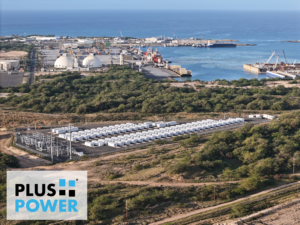
Photo courtesy of Plus Power
Summary of Events
In 2024, two events occurred on the Oahu power grid which necessitated additional grid support:
- On February 9, 2024, a synchronous generator tripped offline unexpectedly, which caused a significant drop in frequency to 59.4 Hz. This level of frequency reduction is extreme and can cause additional grid failures if the frequency is not moved toward nominal quickly. In response to this tripping event, KES was dispatched as a back-up source of generation: it responded within 250 milliseconds and delivered 50 MW of power to the system. This extremely rapid active power response was sustained for 30 minutes, which allowed the Oahu grid frequency to improve safely to near the nominal of 60 Hz.
- On July 31, 2024, a 208 MW generation facility went offline on Oahu, which again caused a reduction in system frequency to approximately 59.4 Hz. As in the previous event, KES responded within milliseconds with a similar fast frequency response. After this fast frequency response, KES continued operating and had provided approximately 200 MWh by the time that solar generation came online after sunrise. Later the same evening, it provided over 300 MWh over four hours to mitigate the reduction of solar generation as the sun set. The GFM fast frequency response, as well as the continued injection of active power to balance load demands, allowed the Oahu power system to avoid rolling blackouts.
Model Validation
To confirm the accuracy of the models used in the utility’s system planning, HECO performed event-based simulations to compare the modeled response of KES to the measured performance as observed during the frequency event. Through this model validation, HECO observed conforming performance trends but not an exact performance match, as seen in Figure 3. As part of the model validation process, HECO worked with stakeholders to correct some parameters in the modeled representation of KES, which resulted in a very close match between modeled and measured performance, as seen in Figure 4.
Figure 3: KES Event-Based Playback Simulation Results Without Model Setting Corrections

Source: Hawaiian Electric Company.
Figure 4: KES Event-Based Playback Simulation Results With Model Setting Corrections
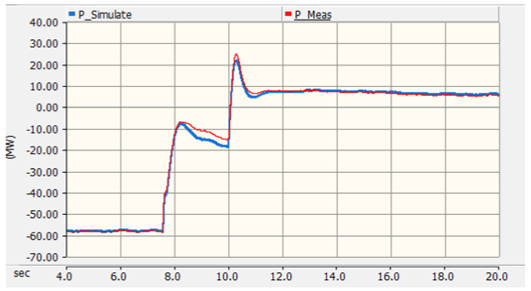
Source: Hawaiian Electric Company.
Summary
These two similar events underscore the importance of grid-forming-enabled BESS as a method of continuing to serve load and provide grid stabilizing services under weak grid conditions. KES also demonstrated an ability to provide energy to the power system over long periods of time to offset lost generation caused by tripping events or lack of renewable generation capacity.